
Berry Wine
Description
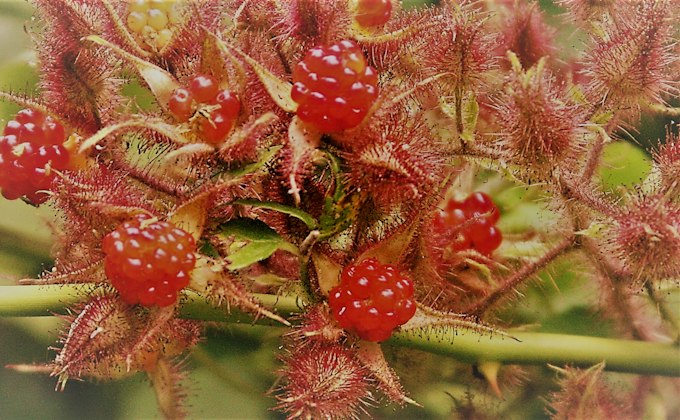
There are so many options for making berry wines, especially where we live in Pennsylvania. Many of the berries I use in my wines grow wild (and plentiful) around my home on the edges of fields and tree-lines.
All of the bramble-berries are available: red raspberries, black raspberries, and blackberries. We also have a few Mulberry trees on and around the property. No matter which berry I'm using, the recipe is similar.
In terms of the quantity of fruit, I'm a little inconsistent, and that's due to the amount of time I have to pick fruit and the amount of fruit that's available at that time. I measure using a gallon-sized freezer bags. I aim for two full bags for each 1 gallon of wine.
Ingredients
Fruit - raspberries, blackberries, blueberries, etc
4 cups sugar
3 3⁄4 quarts water (That's 3 quarts plus 3/4 of a quart - I know, oddly specific)
1 campden tablet, crushed
1 teaspoon acid blend *See Notes*
1 teaspoon yeast nutrient
3⁄4 teaspoon wine tannin
1⁄2 teaspoon peptic enzyme
1⁄2 packet yeast, I prefer Premier Rouge, but have used Cotes de Blanc


Instructions
After picking enough berries to fill at least 2 freezer bags, soak them in water to rinse/remove debris and bugs. Skim floating debris. Rinse again using a strainer. You won't get every spec of dirt, but be as thorough as possible. Add cleaned berries to primary fermenter.
Make a simple syrup with 4 cups of sugar and 3 cups of water. Pour over berries. mush them around, top with remaining water.
Add all remaining ingredients except yeast. Take a specific gravity reading. It should be close to 1.080.
Let rest overnight.
The following day, create a yeast starter with yeast and a little warm water. Let it sit for a few minutes, stir it into the primary fermenter.
Rack to secondary around day 8-10. SG should be closer to .995 or below.
Rack at 30 and again as needed to clear. Bottle when ready after at least 60 days.


Notes
I leave the berries in the must for the full primary fermentation, so my first racking at around 8-10 days involves straining the solids by pouring the must through a straining bag into another large container. I then either pour or siphon into the secondary.
At first racking, this wine will be bright pink and cloudy. Over the next several weeks, it should clear to a lighter, pretty pinkish-red.
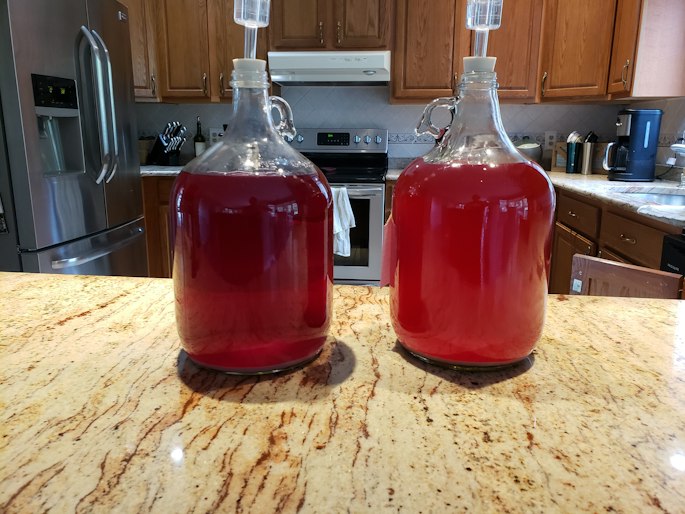
Another point to mention is how the difference in yeast affects the result. In the Finishing pictures below, there are two carboys of raspberry wine that came from an identical recipe, except for the yeast strain. The one on the right used Cotes de Blanc, while the left carboy used Bourgovin RC 212. The Bourgovin batch is lighter in color and has a smooth taste with less berry flavor. The Cote de Blanc batch is darker red and much more tart and bitey, even though both are roughly the same PH. On this particular occasion, I ended up mixing the two together before bottling to get a more balanced blend.
However, I'm now using Premier Rouge for all dark berry wines, because I think the end result is better with more berry flavor.
*Regarding the usage of acid blend, I've found that some of the wild fruit I pick is on the acidic side and doesn't require any additives. If the berry must is already in the low 3's, maybe no acid blend is needed. For mulberry wines, I often have to add 1-3 teaspoons to get the PH where I want it.
End Results
My first berry batches were a bit disappointing. Although the sweetened varieties were good, the dry versions - even at 9 mos old - were bland.
For future vintages, I will stick with Premier Rouge yeast, and try for that 2 full gallon bags of fruit in each batch.