
Pear, Autumn Olive, and Kousa Dogwood Wine
Description
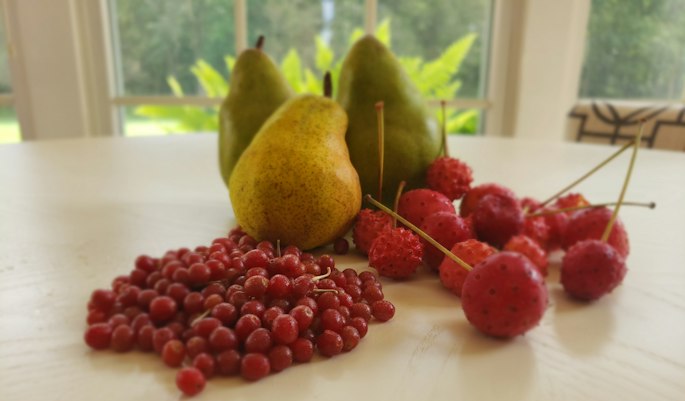
This blend is the embodiment of a country wine: farmer's market pears, autumn olive berries tediously harvested from the forest's edge, and the unusual fruit from an ornamental landscaping tree.
Why combine them? This particular pear variety - and I'll be honest, I have no idea what it is - has a natural sweetness and perfect starting PH level. It makes a nice base that works well with other fruits. Autumn Olive grows wild around our property, but it's incredibly tart, perhaps too tart by itself. Kousa Dogwood is smooth and tropical, with a mild sweetness. Together, they are late summer's bounty, and judging by the taste of the must I just mixed, this will be one to save for a special occasion.
Ingredients
2 gal Kousa Dogwood Fruit Full "berries", picked in gallon-sized bags, not the juice yield
15 oz Autumn Olive Berries
6-10 pears, stemmed and seeded, peels on
1 teaspoon yeast nutrient
1⁄2 teaspoon peptic enzyme
1 campden tablet, crushed
Simple syrup, mixed at 1:1 ratio and added to reach SG of 1.080
1/2 packet Red Star Premiere Classique Yeast


Instructions
The prep on this wine was fairly involved.
The Kousa dogwood fruit has a rough skin that protects a mango-like pulp and multiple seeds. The seeds are similar in size to an apple; therefore, fermenting them might be not be a great idea. Autumn olive (aka Autumnberries) also have a small seed in the center and resemble, both in size and taste, pomegranate seeds.
I tried putting the Kousa fruit through my ancient Champion Juicer, but it's not really made to handle seeds that large. I resorted to squishing out the centers - seeds included - with my hands. The pear and autumn olive I heated briefly on the stove with a small amount of water and then crushed with an immersion blender. After mixing everything together, the end result was a puree/mash.
The mash sat overnight in a covered container with peptic enzyme, yeast nutrient, and a crushed campden tablet. The following day, I strained it through a fine mesh bag to extract only juice. This was very messy, and the juice yield, even with what seemed like a lot of fruit, was only about half a gallon. I added simple syrup until the SG was 1.080, followed by a yeast starter using Premier Classique (Montrachet).
The starting PH was around 3.5, so I did not add an acid blend.
At day 10, the must was still at an SG of 1.00, so I continued to let it sit until it reached .995 before racking into a half gallon secondary.
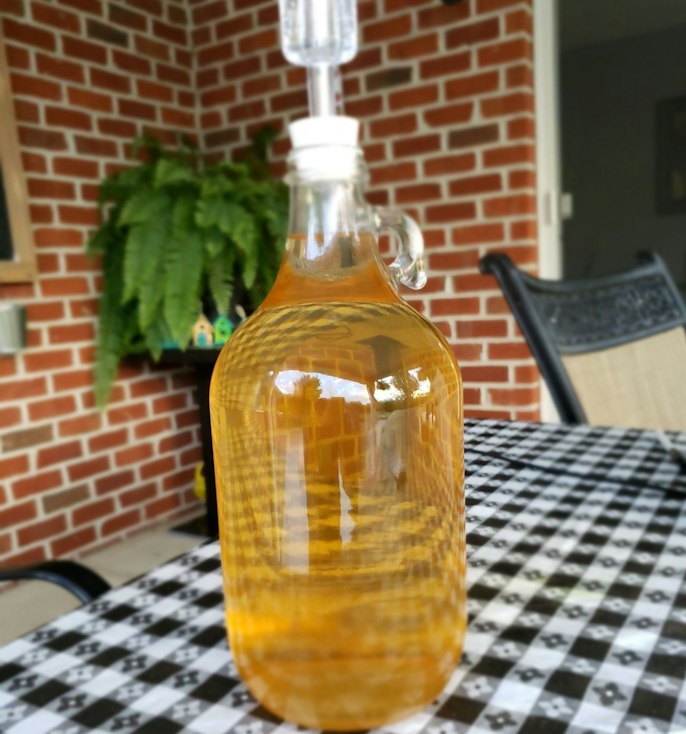
This wine was fined with Kiesesol and Chitosan around day 60. I slightly sweetened it with simple syrup after stabilizing with Potassium Sorbate and a campden tablet at day 70. Bottled.


Notes
End Results
This wine aged for about a year before I tried it. The finished result was a light, semi-fruity white wine. While it was decent, I've never made this recipe again due to the extensive prep time for a very small amount of wine.